Overview
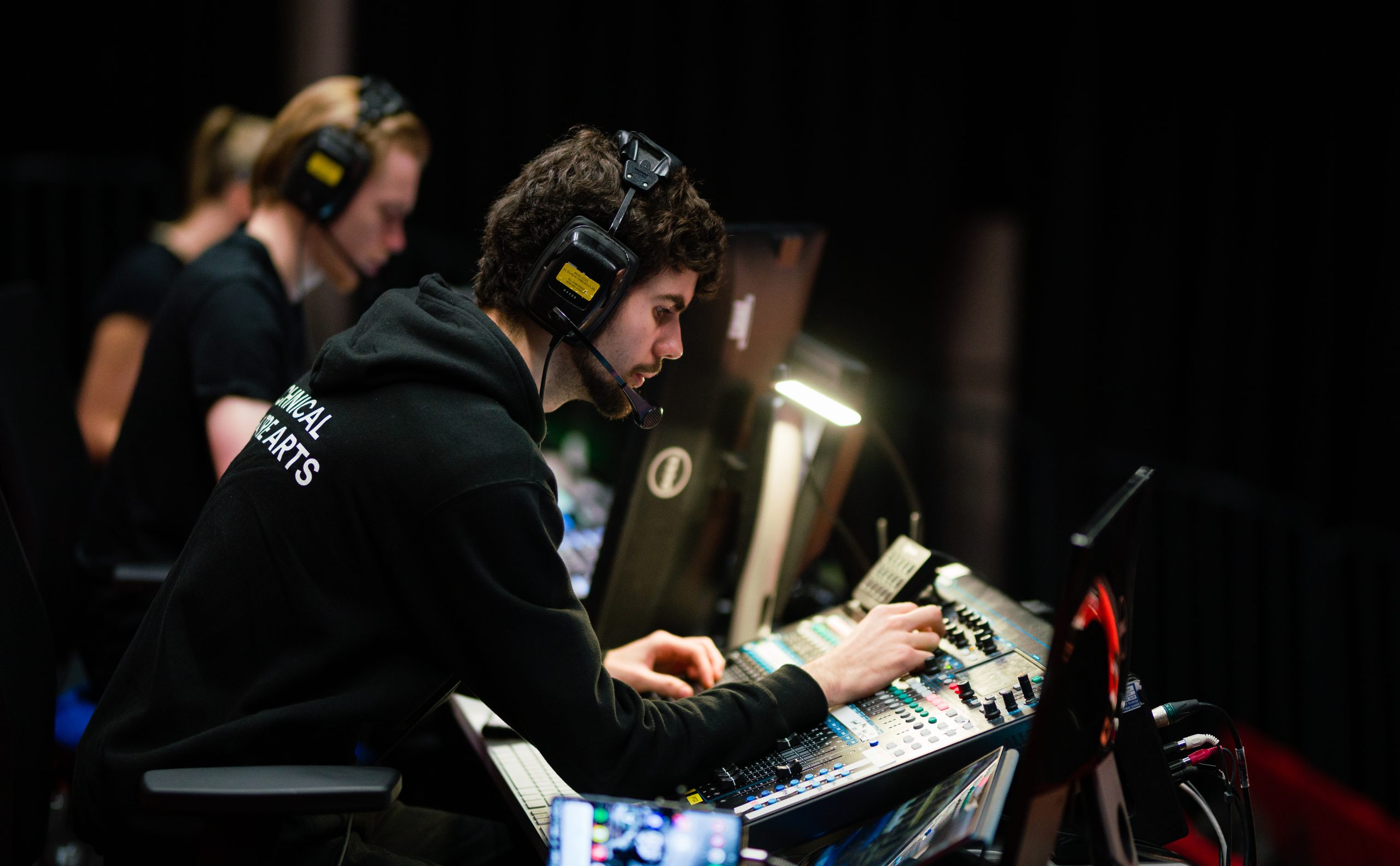
For Pavilion my given role was AV Operator looking after sound and projection. I also helped out where I could with other areas such as lighting when needed. I was also on the set build workshop crew for Group B shows.
My designer in 3rd year was Livvy Spark.
Design Process
System Design
Starting off design we looked at some initial system configurations and speaker placements, the designer said to me that they were less confident in this area and was fully open to design suggestions. I created some initial ideas in vector works which I suggested to my designer and the director with the consideration of set design.
Design 1
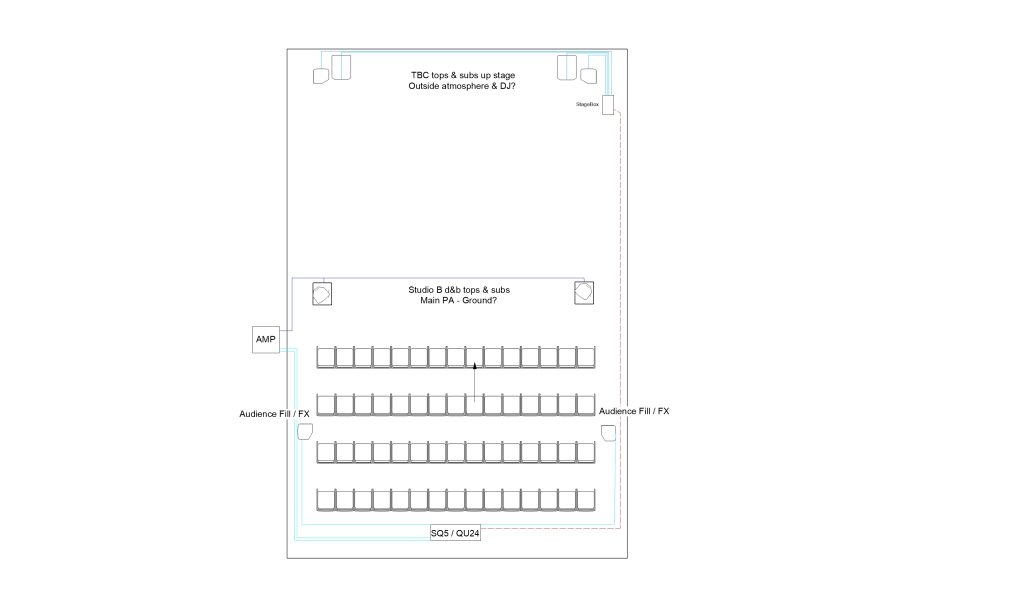
This was one of the first design I came up with initially we were looking at doing a bit more spatial audio, livvy was playing with the idea of side audience fills so they were included however there was no realistic placement for those so they were cut immediately.
It was also said to me originally that the d&b system which is the main system for studio b would be ground stacked instead of flown so that was stacked Infront of the audience as main PA. Since it was set in a pub we wanted to create an inside and outside atmosphere so I suggested adding some speakers and subs up the back to be able to create a better movement atmosphere and fill.
Design 2
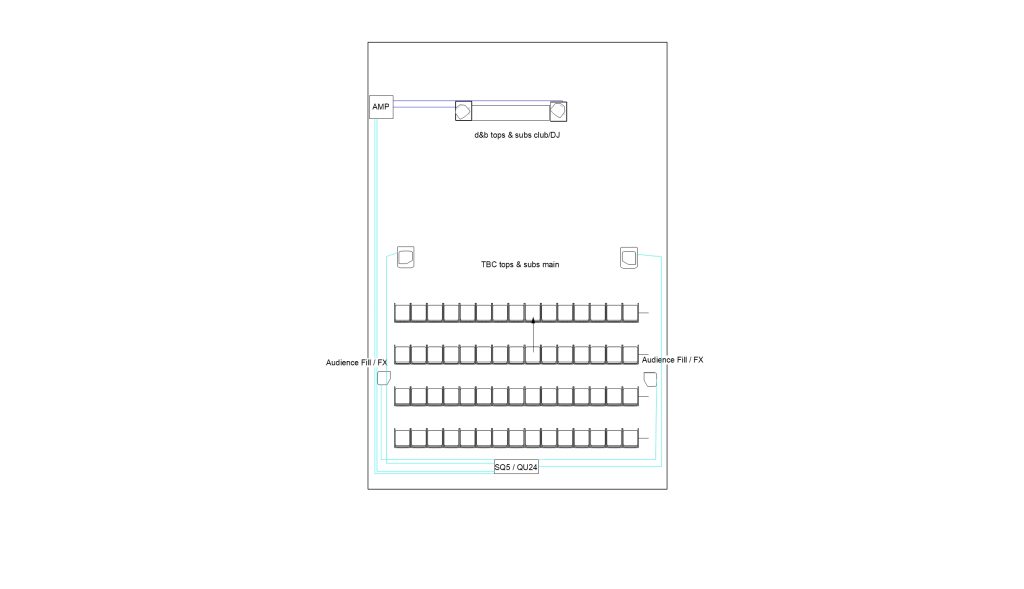
In this design I formatted it so that the main source of the PA was coming from the DJ booth for mainly cosmetics with possibly another set of PA in front of the audience.
Reflecting on this design now I dont like it at all, If I was to use this the d&b should still have been in front of the audience as the main PA and the other set at the booth. The speakers in that configuration would be way to close together so may effect spread and phase.
Final Design
With these designs considered it was decided that the d&b PA would stay in its default configuration with two flown E12s and what would have been d&b floor positioned subs.
It was decided that our subs would be given to the spring crew which left is with lower quality studio spares subs. These did the job but with a definite quality reduction. Although it was the 3rd years call to transfer this kit as the sound operator I would have liked to be consulted about this decision as I disagreed I think we should have kept our kit as its not our responsibility to supply other studios.
I also think the sound scape ended up being a bit flat without any additional speakers obviously this was up to the designer and I fully respect their decision however I would have done it differently.
Qlab
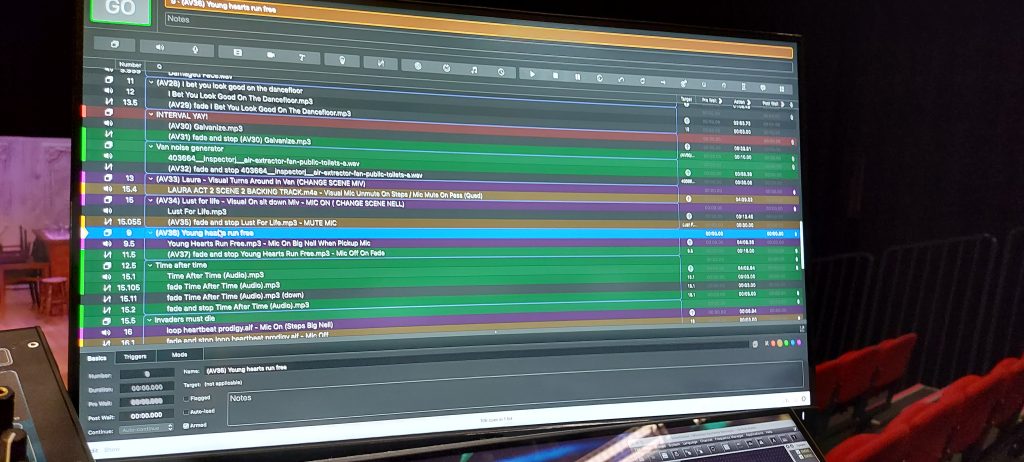
The Qlab was developed during the design process, the director and designer mainly discussed music that was a crucial part to the show and created the initial Qlab. I was tasked to find the sound effects for the Qlab based on discussion and presented multiple of each effect in a meeting.
Once the main structure was completed it was handed to me to fix and program additional effects like fades and follows it was then prepared for the show. The Qlab was continually edited updating and adding tracks and effects during tech. I also colour coded it so it was easier for me to read and understand what was happening during the show. I ensured we had multiple backups at all times.
Insert Qlab Picture
Set Build (Workshop)
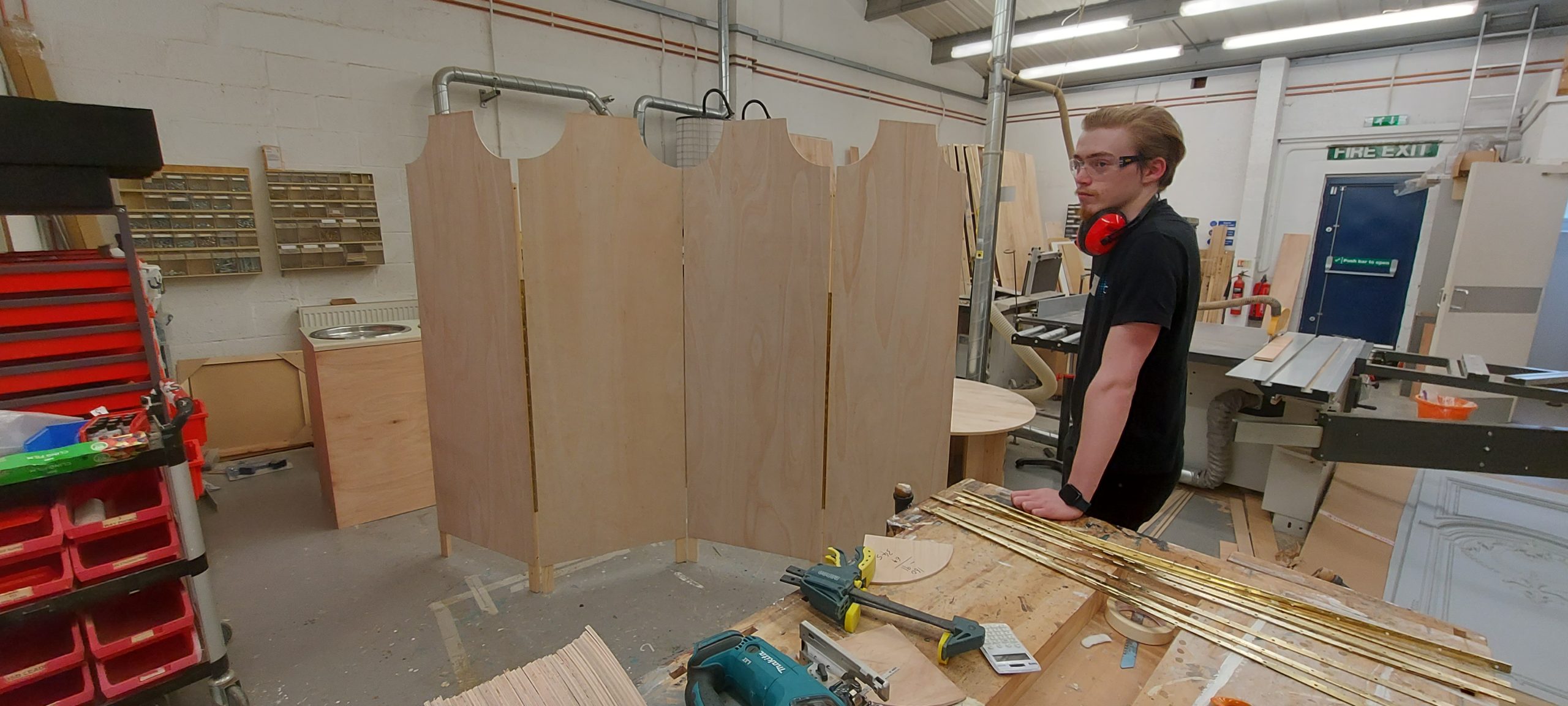
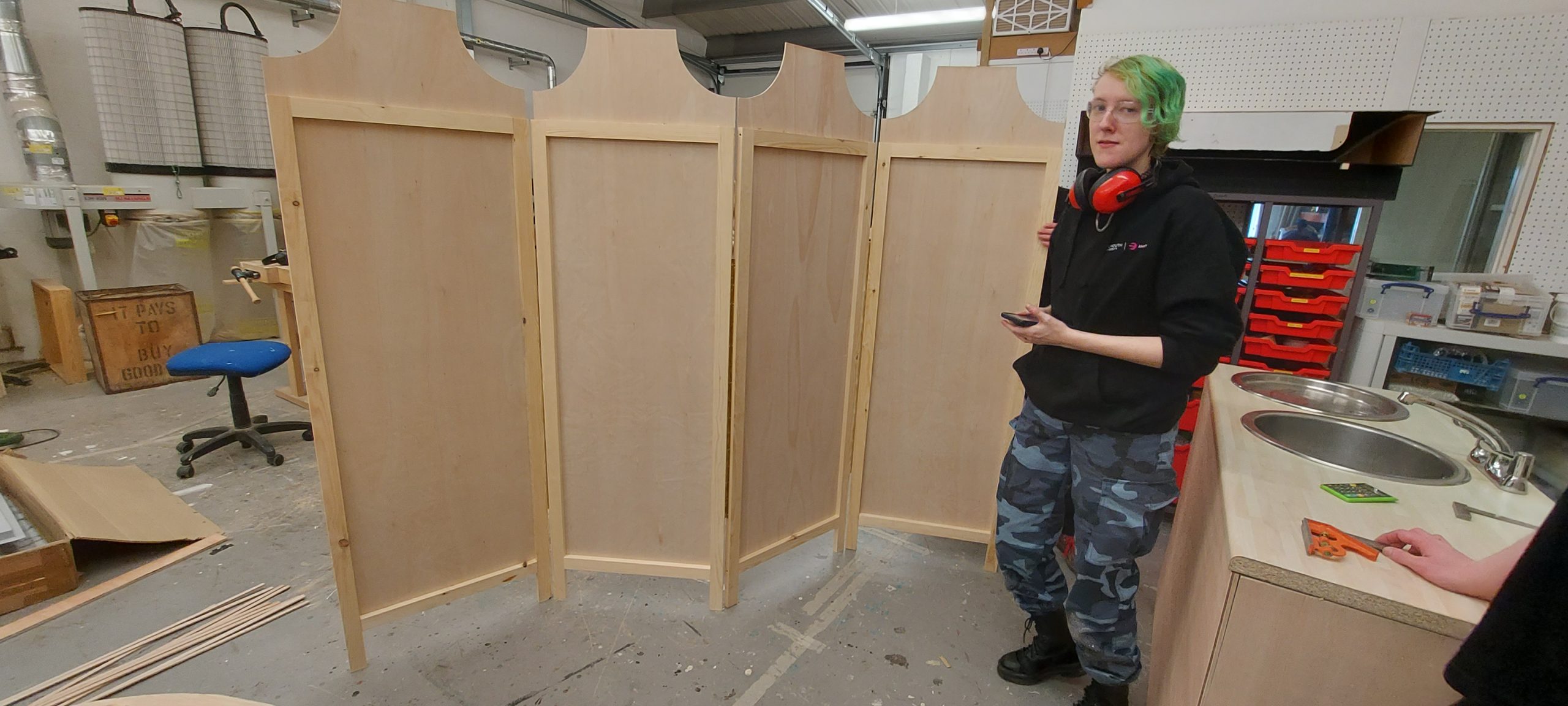
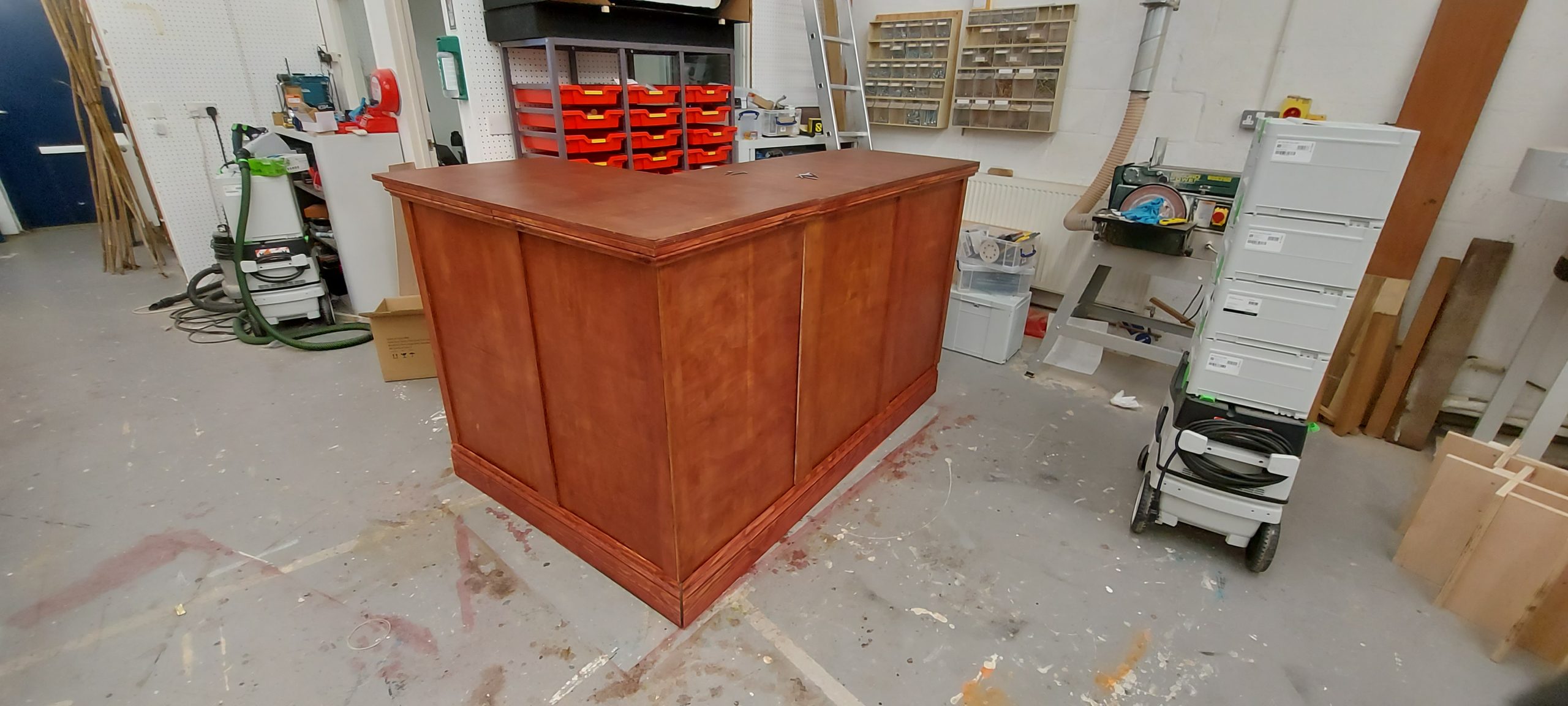
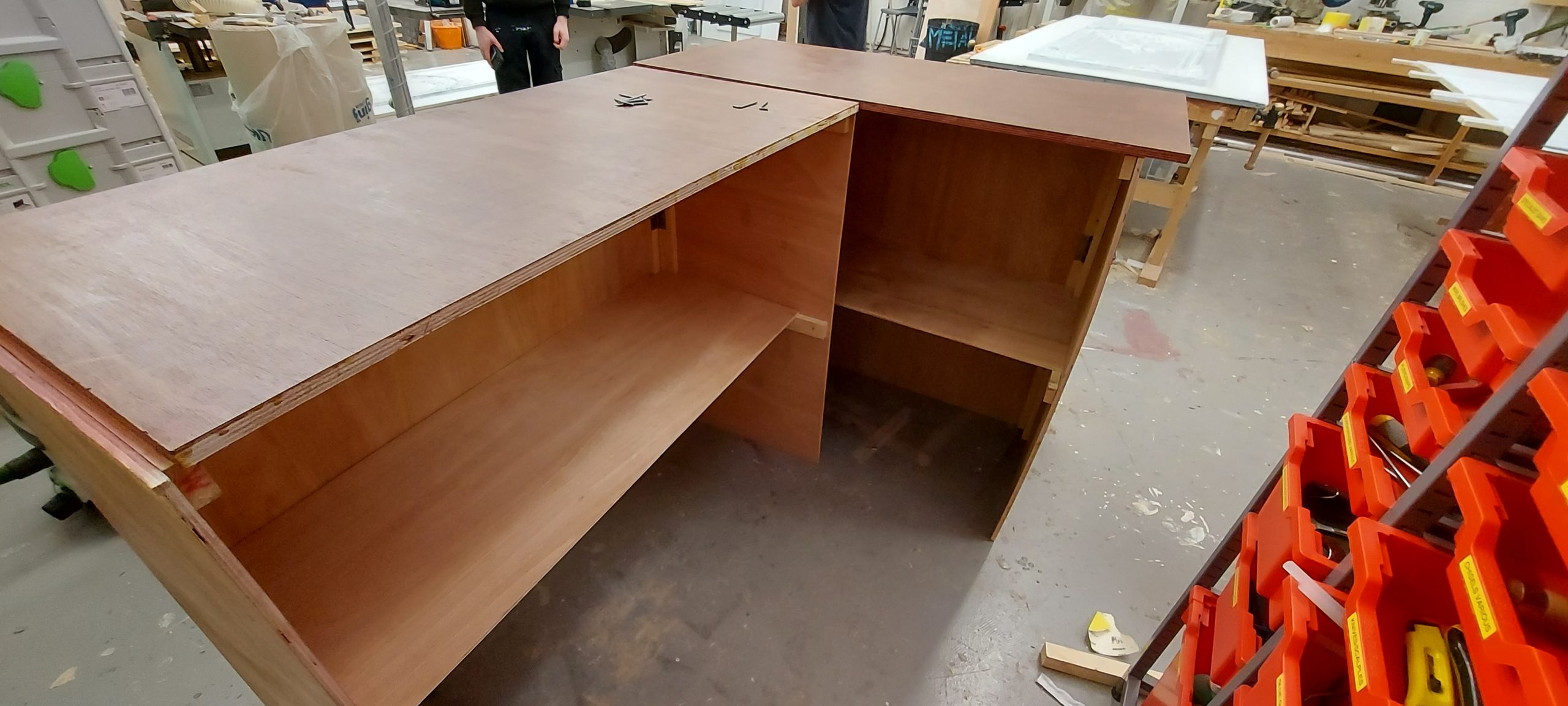
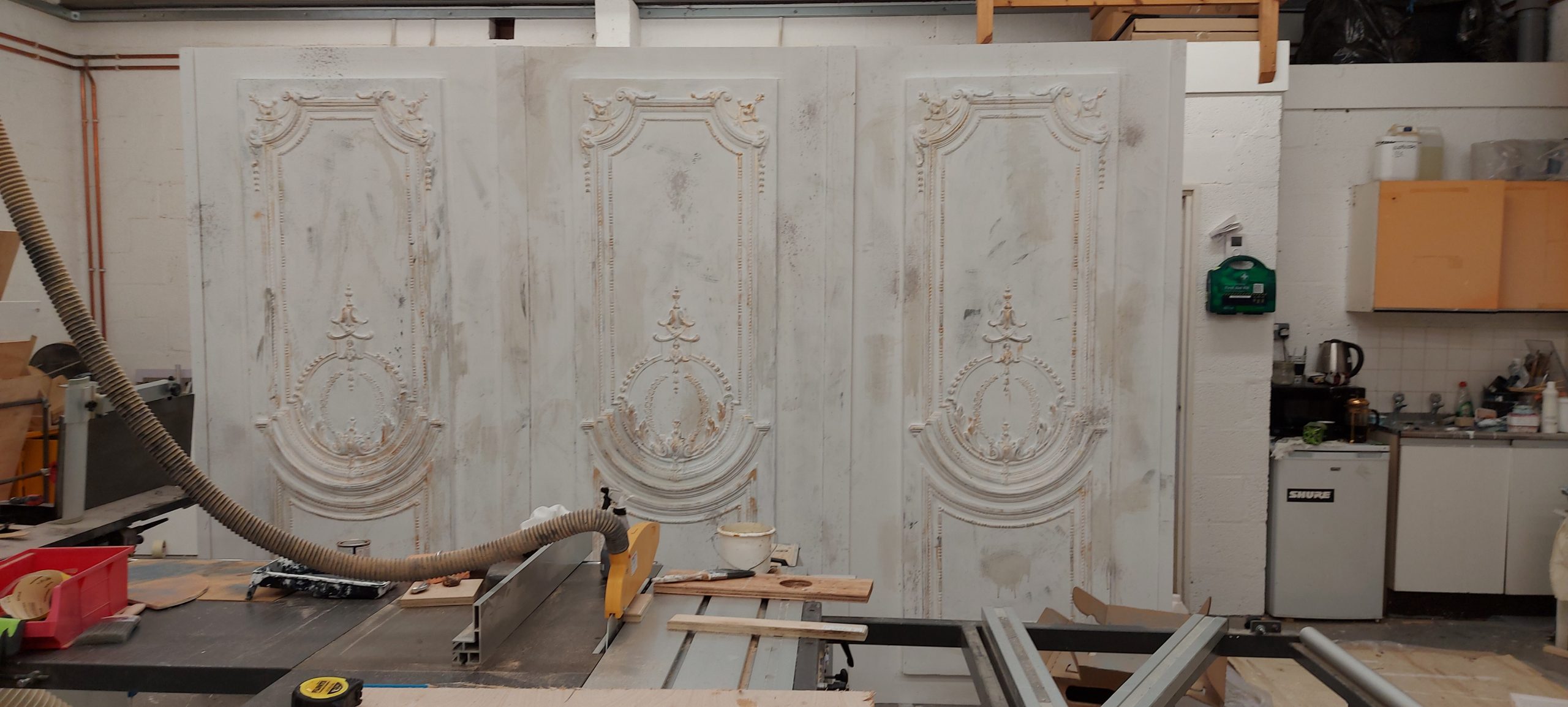
Myself, Skye and Jack Smith were tasked by the 3rd years to build all the set for both pavilion and scandal town, this included all the flats, the chip van, the bar and so on. We used equipment and skilled we learned from our induction under the guidance of Ryan to create these pieces. It was a good experience and we were able to get it all done however it would have been nice to have stronger design documentation from the designers and also additional people to support our efforts.
Operation & Tech
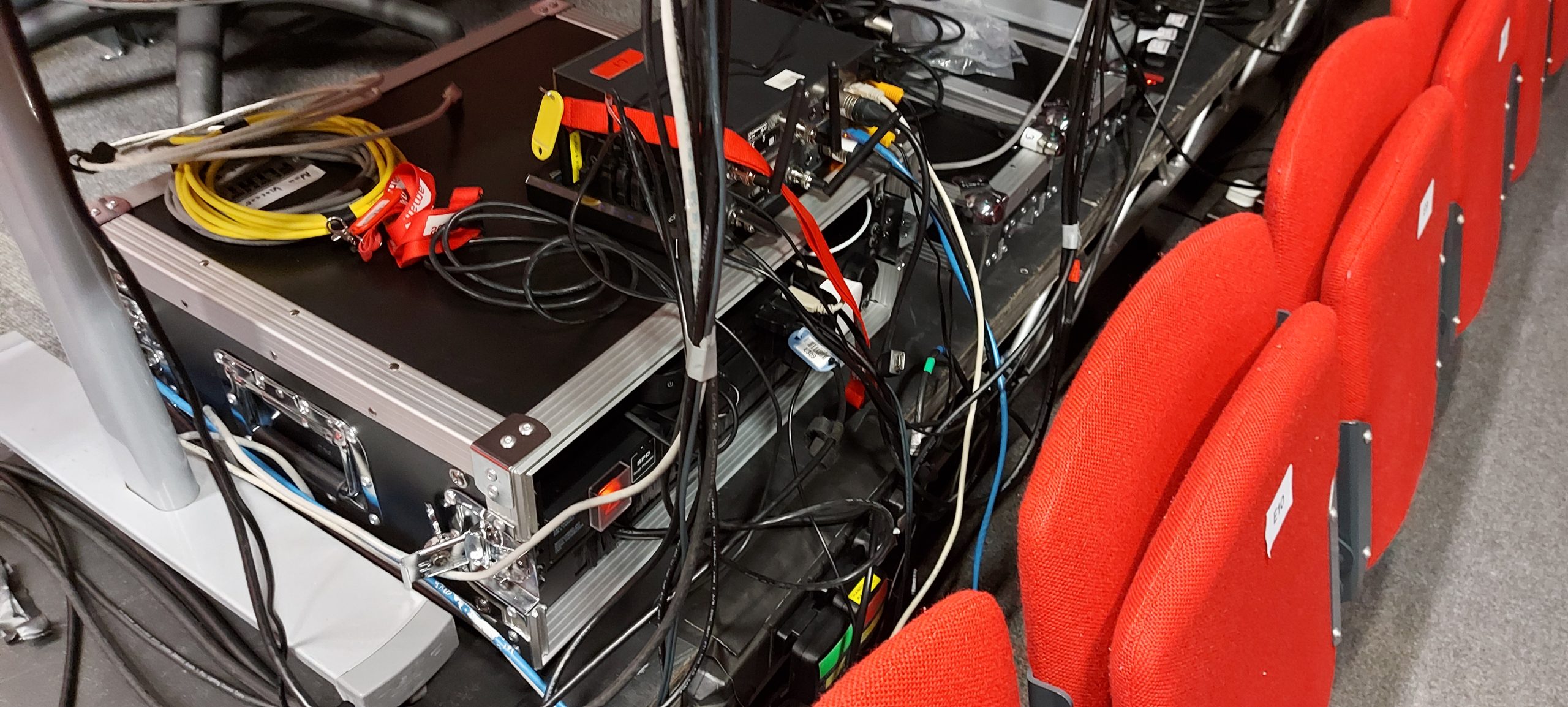
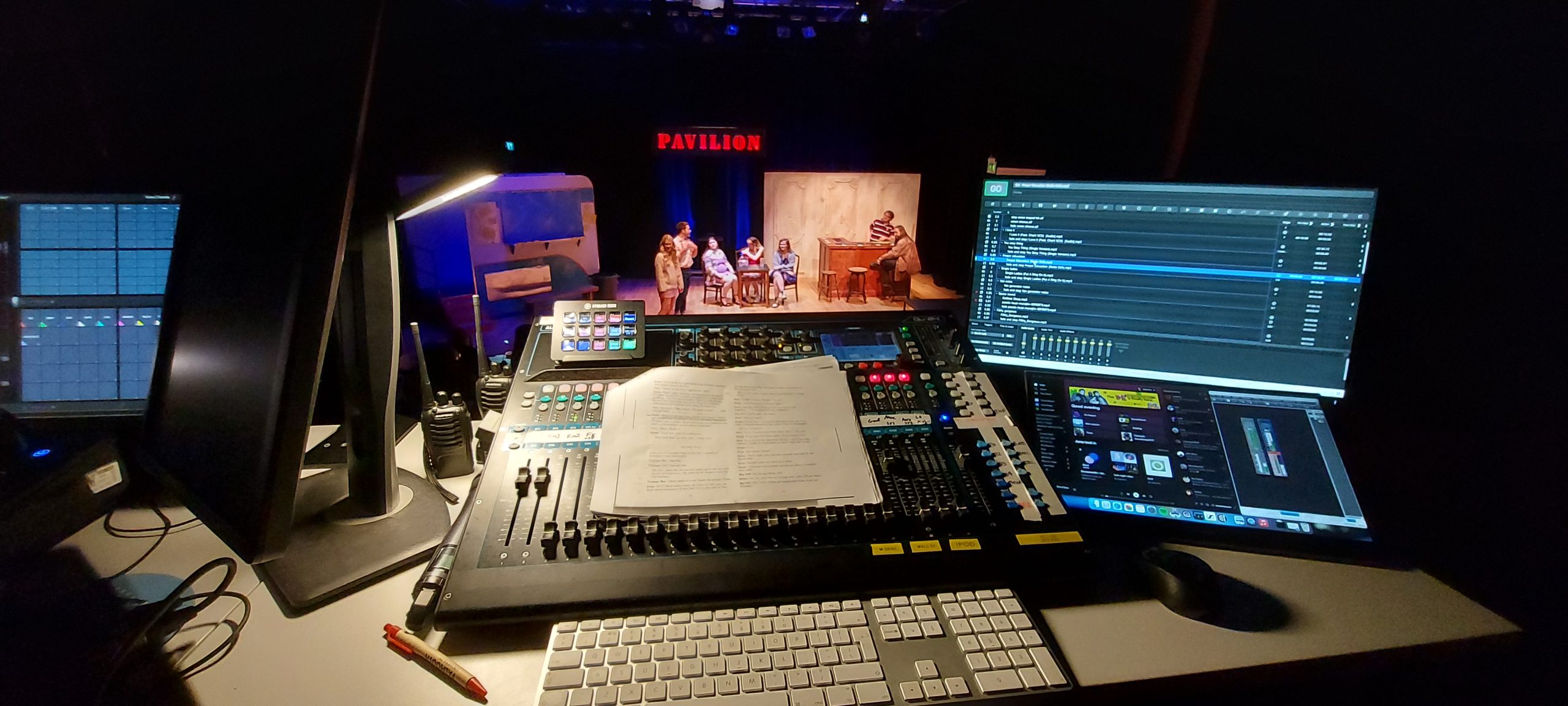
I was responsible for the setup of the entire system during get in & tech. This involved me configuring the amps and PA, programming the desk and setting up the radio mics and computer. The desk I was using was the Allen and Heath QU24 which was a desk I knew and loved which also happened to be the studio B default desk. Its a digital desk with configurable layouts which came in really handy for my setup as I had everything where I wanted on the custom layer. The main computer and network was running on a mac min in my personal rack which is explained more in another section. The mac was connected to the desk via USB interface as I could patch Qlab audio over multiple channels and it also meant I avoided any unwanted interference or audio.
I was running two Sennheiser G3 radio mics one of which was used as a redundant and sound mic. The other mic was used on stage for vocals and performance. In my rack I had a 24 port network switch which allowed me to tie the radio mics into Sennheiser’s Wireless Systems Manager (WSM) which allowed me to easily configure the mics and monitor RF and battery level.
The one mic was used by two different people during the shows which meant I needed to separate EQs and volumes, originally since we had the second wireless mic I wanted them to use one each which was something the director didn’t want. It would have meant all I would have had to do is unmute the separate channels however reluctantly I used scenes on the QU to record each preset and quickly change to them during the show using two soft keys I setup to change to each scene.
Although not the way I wanted to do it it was an effective way of doing it with the directors wishes just meant that I had to be on the ball at changing scenes were required.
The main L&R feed was output via a dsnake line I installed to a ARB4 Stage box rack located on the balcony which then sent to the amps.
For tech and show announcements I installed a god mic for use by the SM and DSM. The mic was a SM58 tied into the same stage box sent to the desk, due to the location of the rack it the mic could be used up on the balcony or run down to the front of the seating block for tech.
I was also responsible for projection, which I had major issues with to start with the projector hadn’t been specked by the designer with HDBaseT which meant we had to send it over long HDMI cables, I also had issues with my mac not sending output to the projector which is something we spent a while on trouble shooting, due to it being my kit I was quick to dismiss the fact it was my equipment at fault which resulted in projection not being functional for some of the tech runs. I however did fix the issue with a reset, and I now hold up my hands for being at fault, however I still managed to solve the issue. All projection was later cut for pavilion due to the projector being too dim and the background being changed to black.
The kit was new and had not been used in production yet I knew there would be some set backs I was willing to confront. I had a couple of instances were the mac crashed possibly due to being on for long hours in a hot room but I was still confident in it, we agreed to restart it before live shows and had no further issues, I also had a backup on hand should something had gone wrong. There is a lot more pressure when your own kit goes wrong.
During tech I was one of the first people to arrive and switch on and one of the last people to leave and switch off, I also came in on a couple of weekends to get everything sorted for myself and lighting so that we were ready for our limited time in tech.
The shows!
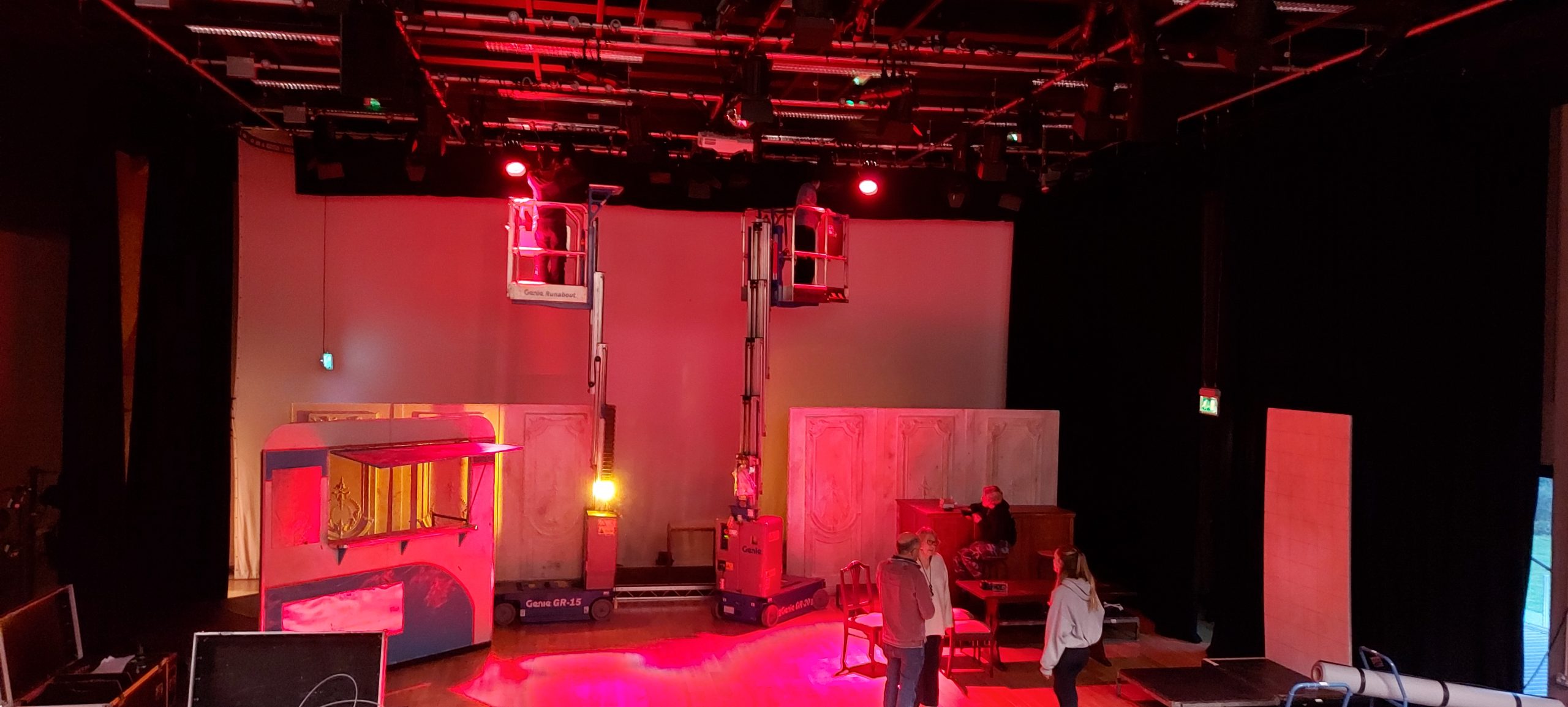
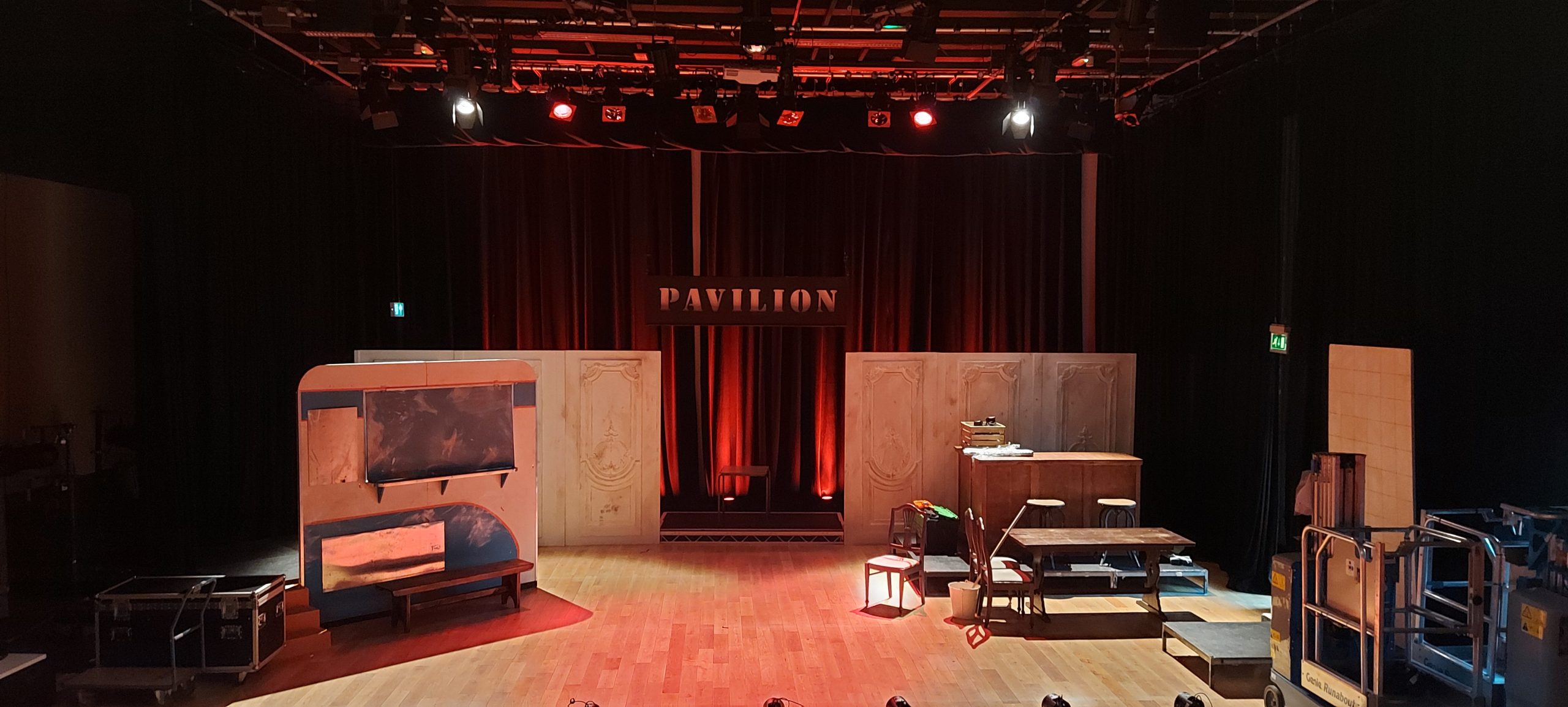
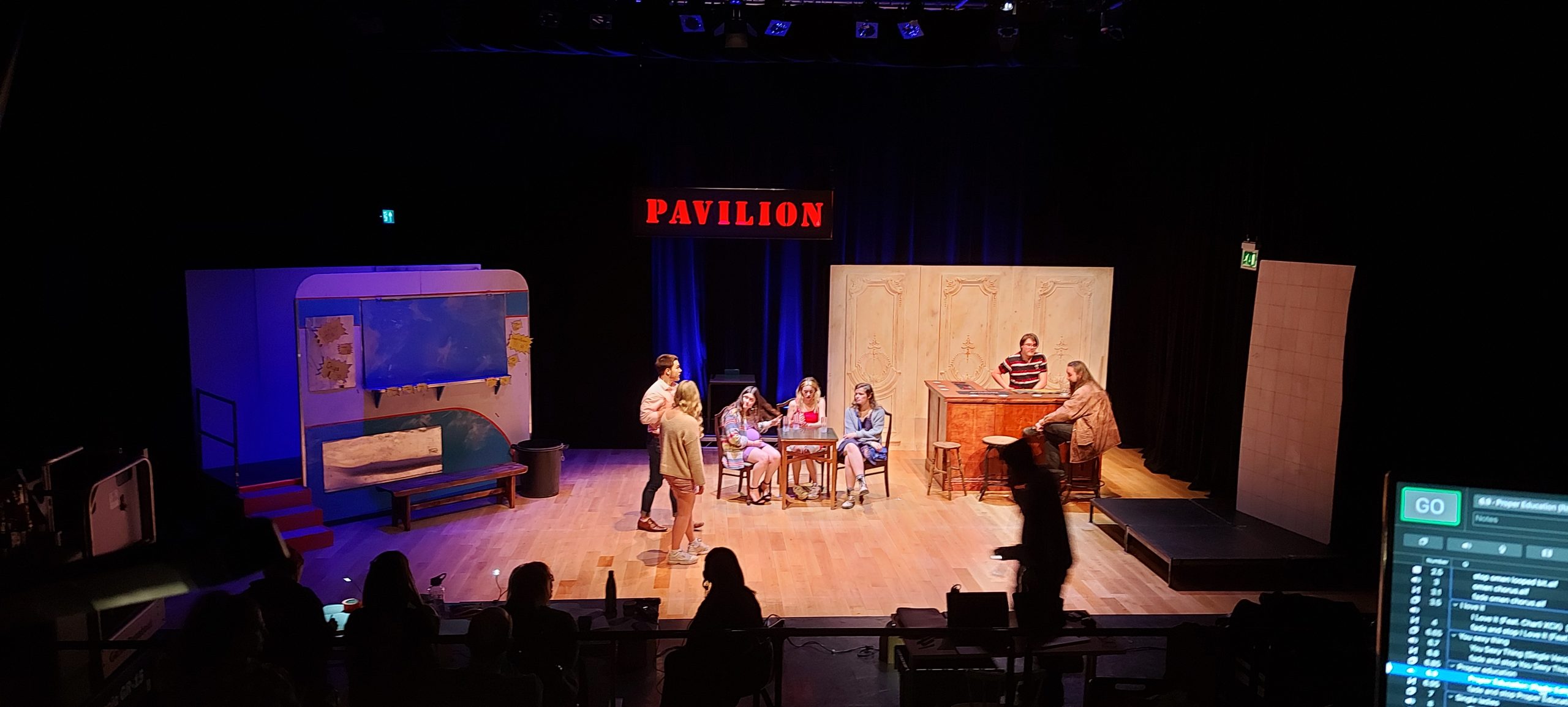
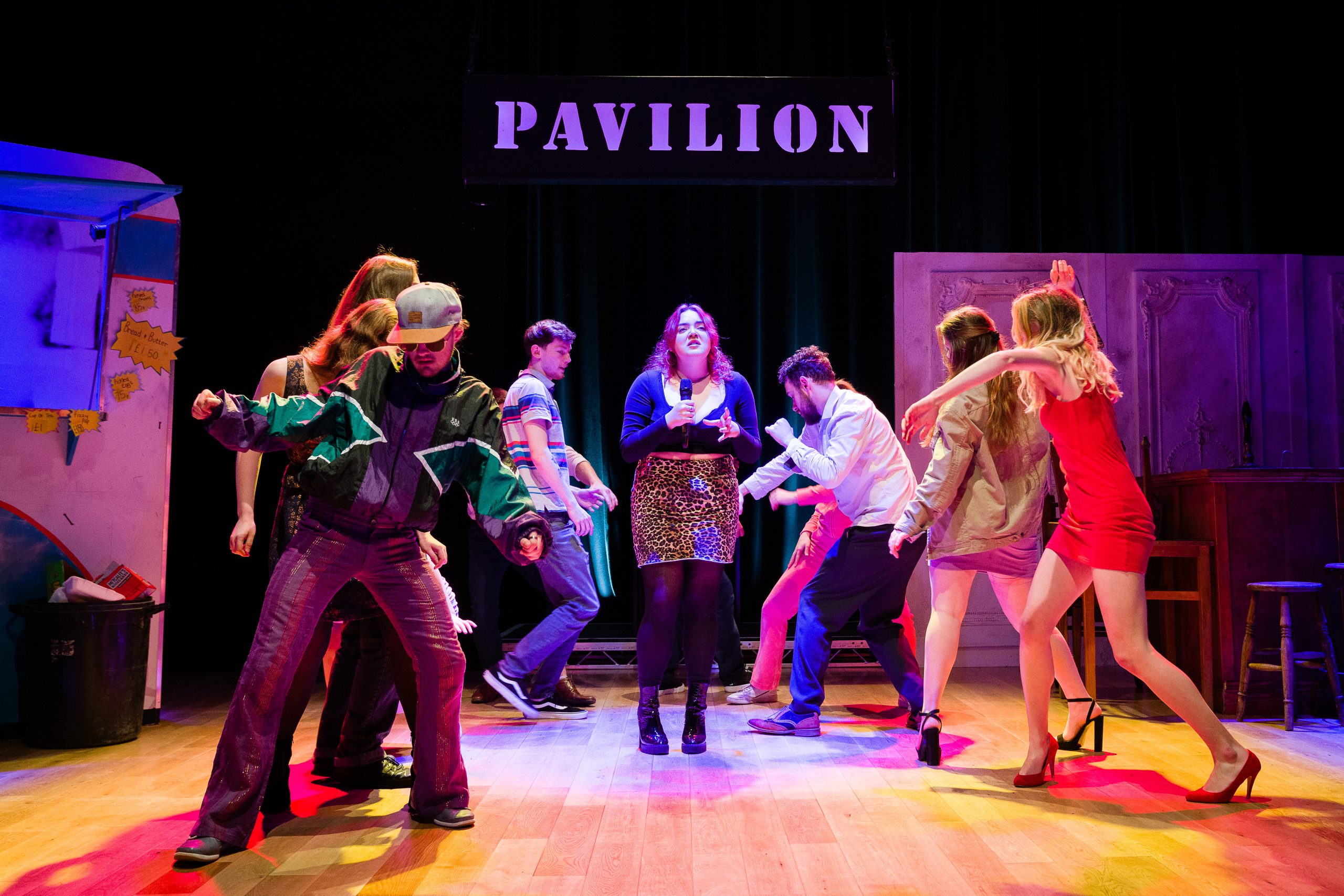
I really loved working with the crew and cast on pavilion I got on really well with mostly everyone and the director and in my opinion the shows went very smoothly. During the show my main operation duty’s were to fire ques in Qlab, unmute mics when required and change EQ scene when required. The cues were being called by DSM however I had a lot of visual cues which I had to be be very alert about as they had to be on the dot to work such as a dart smashing a glass bottle, these are cues dsm would call however I would fire without delay.
After a couple of live shows the director wanted to make additions to the Qlab, some of which I objected to but ultimately compromised in doing. The reason I objected was because the lab was very sequence heavy with a lot of it being timed and followed, changing this right before a show with no rehearsal time was not idea as I did not have time to fix and adjust if something had broken. If it had been done before the live runs that would have been fine. This did catch me out a couple of times during live shows but it was very minor however I still feel could have been avoided.
We also had an emergency first aid incident at the end of one of the live shows however this was communicated down coms and I acted quickly to get the duty tech and first aider to resolve the issue.
References
Wireless Systems Manager (WSM) Sennheiser WSM . Available at: https://en-uk.sennheiser.com/service-support-services-wireless-systems-manager
The audio patch editor: Qlab 4 documentation QLab. Available at: https://qlab.app/docs/v4/audio/audio-patch-editor/